An audio project is easier to maintain when the source text has a clear structure. A single exported PDF may hide several different things: chapter headings, running page labels, captions, and the actual manuscript. Before choosing a voice, it helps to turn those visual conventions into an explicit reading order.
Play HT presents an audiobook maker that starts with document import or pasted text, followed by chapter review. This article follows the visible preparation workflow and the site's published restrictions. It is not a report of a completed paid generation, and it makes no claim about narration quality.
Establish a clean source
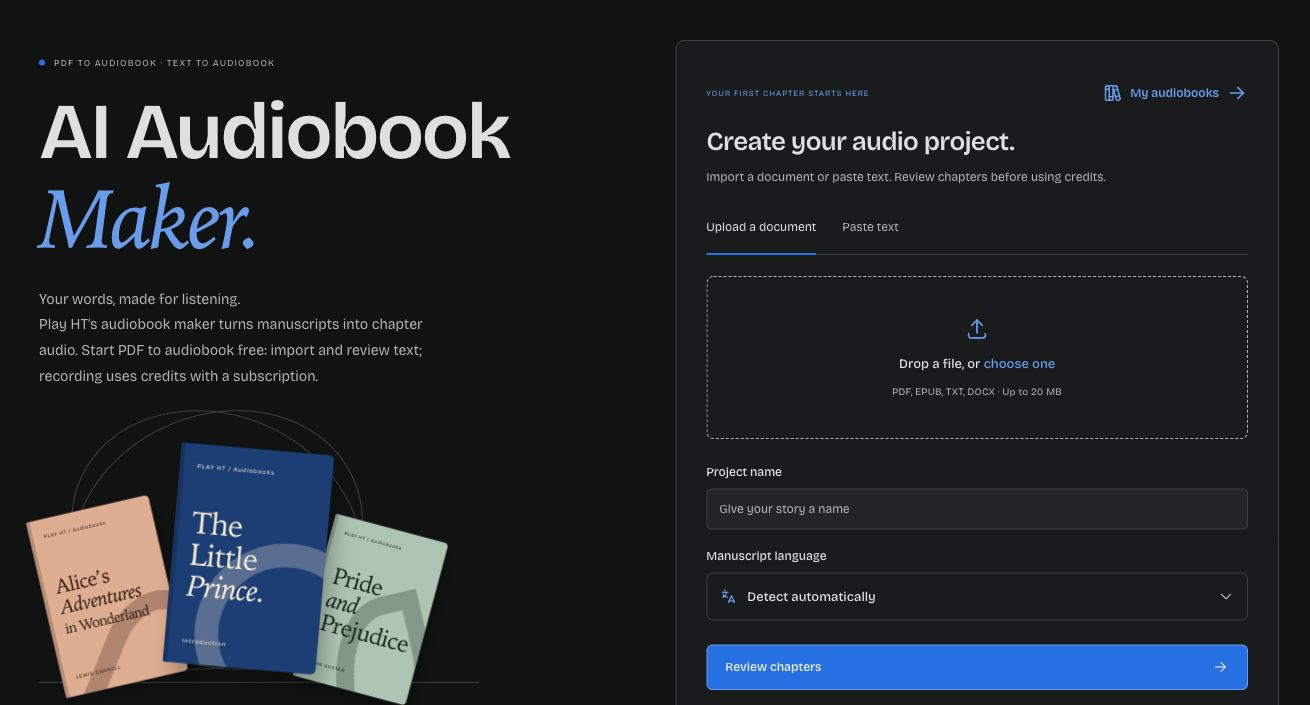
The upload form accepts PDF, EPUB, TXT, and DOCX files up to 20 MB. For PDF to audiobook preparation, the PDF needs selectable text. A scanned page needs OCR first, and protected documents may be unreadable. A text-first alternative is to clean the manuscript and use the Paste text tab.
Try copying a paragraph out of the PDF before importing the entire file. Check paragraph order, punctuation, and characters such as quotation marks. If the document uses columns, make sure the text does not jump between them. Remove repeated headings and page numbers from the narration copy.
Keep a copy of the approved manuscript outside the audio project. That gives a collaborator a stable reference when a spoken passage needs revision. It also makes it easier to tell whether an issue came from the source text, chapter organization, or a later narration choice.
Make chapter boundaries explicit
The form's next action is Review chapters. It also asks for a project name and a manuscript language, with automatic detection available. When pasting text, the interface advises separating chapters with headings.
A useful review starts at the boundaries. Read the first paragraph of each chapter and then its last paragraph. Check that the contents page has not become a string of empty chapters. Look for a caption or footnote that belongs somewhere else. The intended listening order may differ from the order that made sense on a printed page.
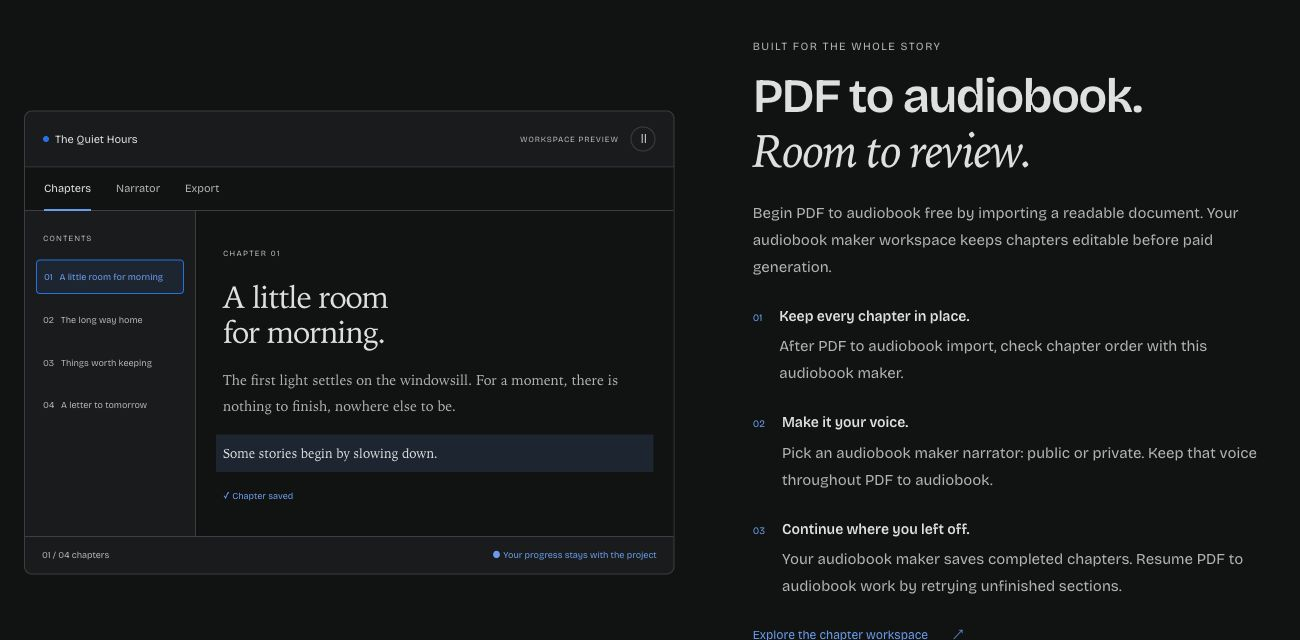
The public product page describes editable chapters and resuming unfinished sections after a long generation stops. Its workspace illustration explains that flow, but it remains an illustration. It does not show a real result from the manuscript you are about to submit.
Agree on the narrator and budget
Before requesting audio, choose a narrator whose delivery fits the material. The page presents public and private-voice options; private voices follow subscription permissions. Check names, abbreviations, and recurring terms before committing a long chapter. Short generation previews can help, but they use credits.
The distinction between preparation and generation is explicit. Import and review use no generation credits. Long-form generation needs an active subscription and credits. The calculator's Basic example shows 50,000 characters starting at 500 credits, at one credit per 100 characters.
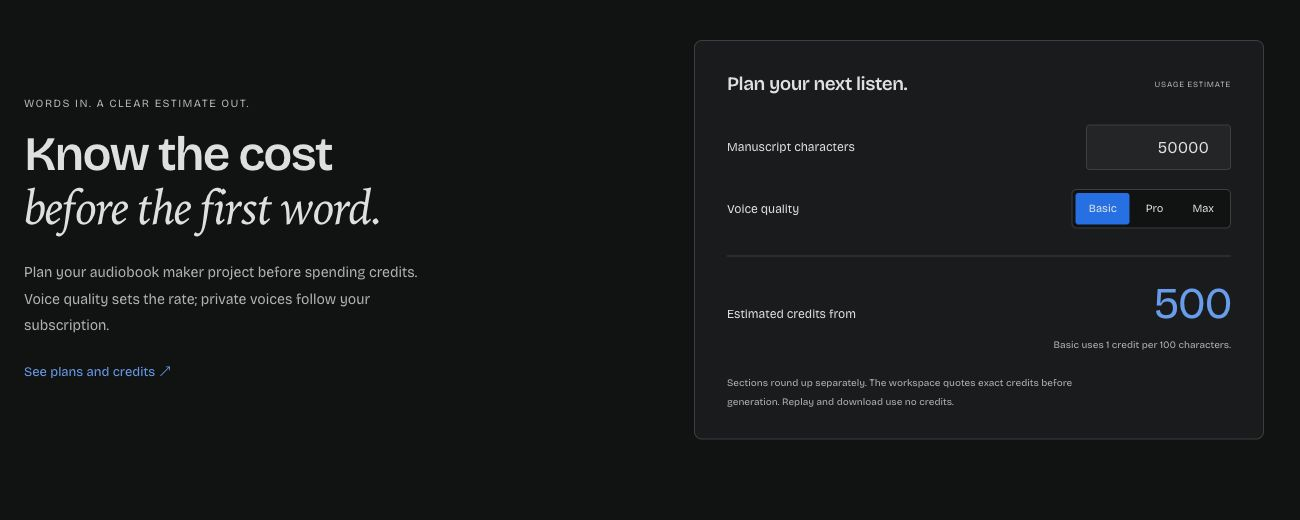
Sections round up separately, and the workspace quotes the exact cost before generation. Voice quality changes the rate. Revisions use additional credits, so approving the text and narrator first is a practical budget decision rather than a cosmetic workflow preference.
Choose a deliverable that matches the next step
The product advertises a combined MP3 and a ZIP containing individual chapter MP3s. Replay and download use no extra generation credits. A course editor may want one file per lesson, while a listening library may work better with a continuous MP3.
For a first PDF to audiobook project, start with a short manuscript that you have permission to narrate. Review the extracted paragraphs, give the chapters a meaningful order, and inspect the cost before generation. The durable output of the preparation stage is an approved listening script; the audio file is the next step built from it.
Comments
Join the discussionNo comments yet. Be the first to comment.